
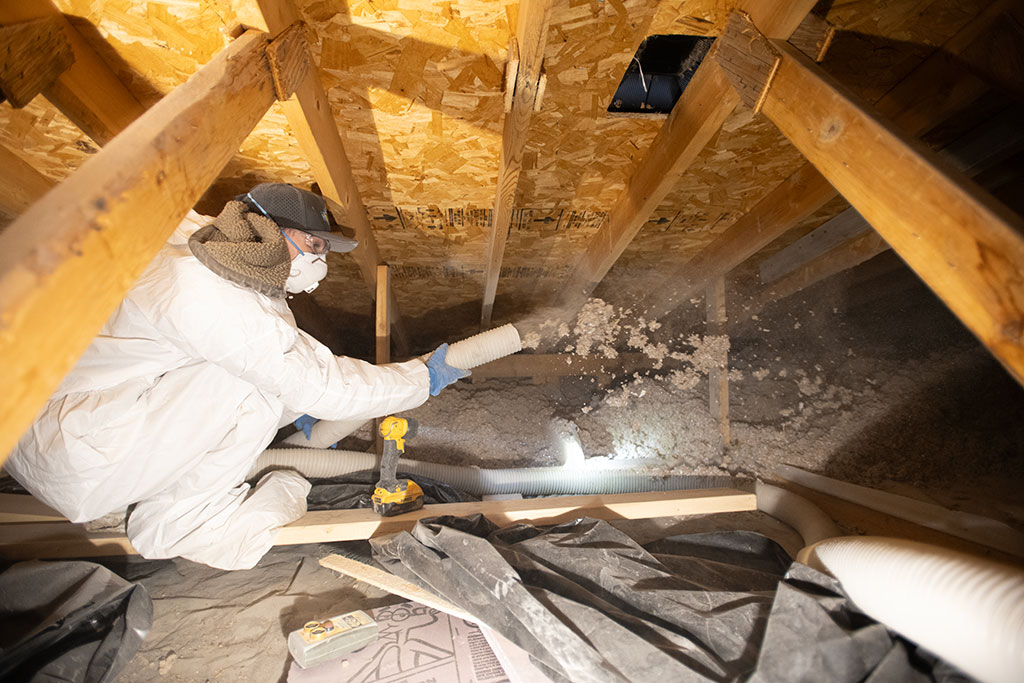
Weatherization work is active by nature. The job focuses on improving how homes handle energy, which means technicians spend their time inside houses identifying problems and completing upgrades that make those homes more efficient.
Because the work involves insulation, air sealing, and other building improvements, technicians are moving throughout the day. Tools are used regularly, materials are handled, and crews move between different parts of the home depending on what the project requires.
For people who prefer working with their hands and staying active during the day, weatherization jobs often feel like a natural fit.
What a Typical Workday Looks Like
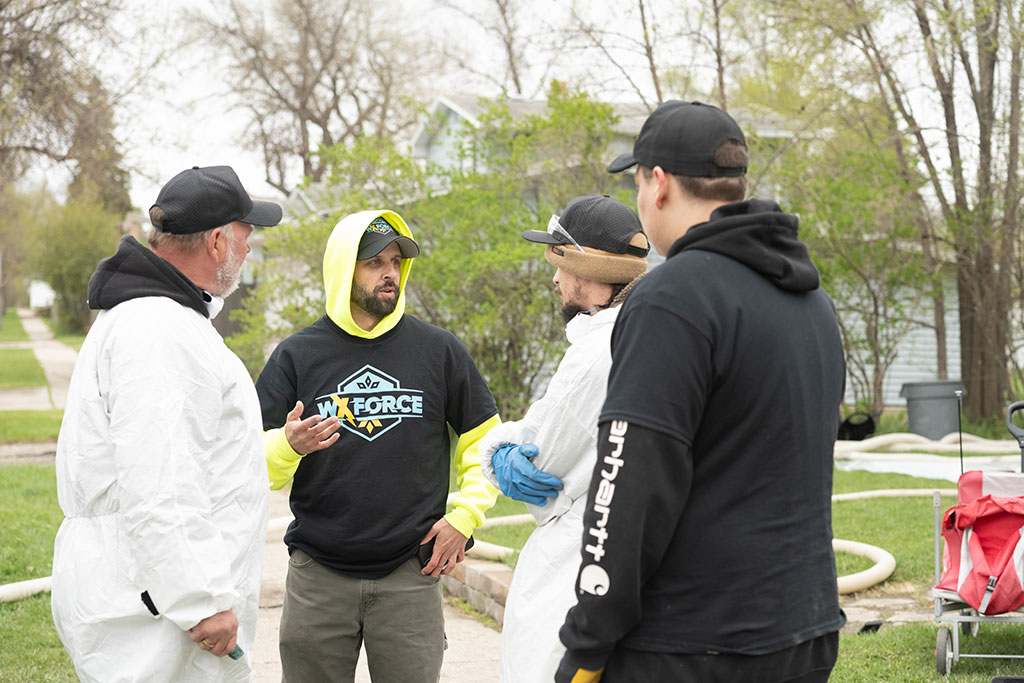
Most mornings start with a quick conversation about the home the crew will be working on that day. The team reviews the work plan and talks through what improvements need to happen before the project is finished.
From there, the work begins.
A typical day might include several different tasks, such as installing insulation in an attic, sealing areas where warm air is escaping, or preparing materials that will be used throughout the job.
Some of the most common activities technicians perform include:
- installing insulation in attics, walls, or crawlspaces
- sealing air leaks around framing and structural openings
- setting up tools and equipment for the project
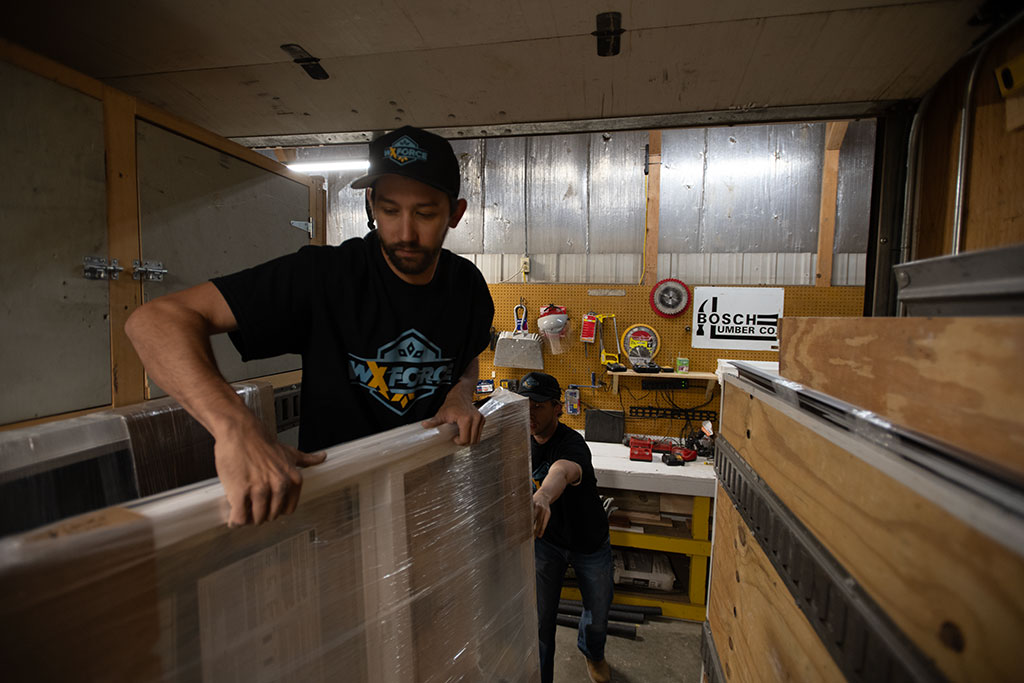
- moving insulation materials and supplies around the job site
The work is done as a team. Crews usually consist of a small group of technicians working together under a crew leader who helps coordinate the project and make sure everything is completed safely.
Every Home Is Different
One thing that keeps weatherization work interesting is that no two houses are exactly the same.
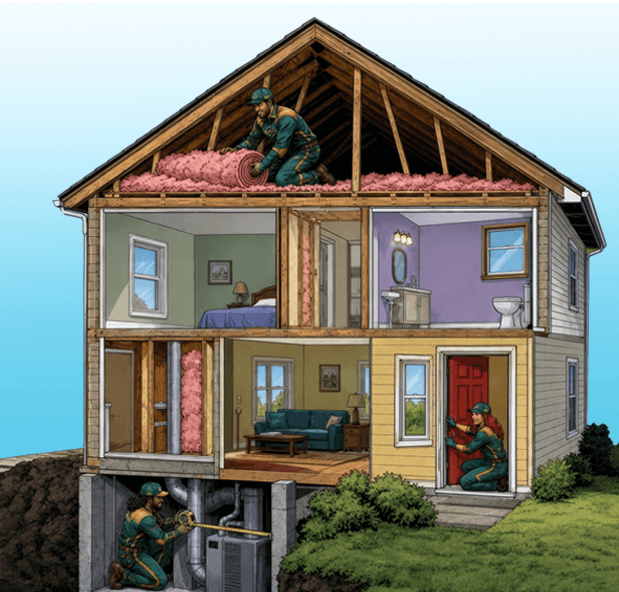
Some homes need improvements in the attic where insulation levels are low. Others may have air leaks around foundations or gaps in crawlspaces where heat escapes. In older homes, crews may spend more time identifying areas where insulation was never installed properly in the first place.
Technicians may find themselves working in several areas of the home throughout the day, including:
- attics where insulation upgrades are needed
- basements or crawlspaces where air leaks occur
- mechanical rooms near heating systems
- exterior areas where drafts enter the house
Each home presents its own layout and its own set of problems to solve. Over time technicians learn to recognize where improvements will have the biggest impact.
The Physical Side of the Job
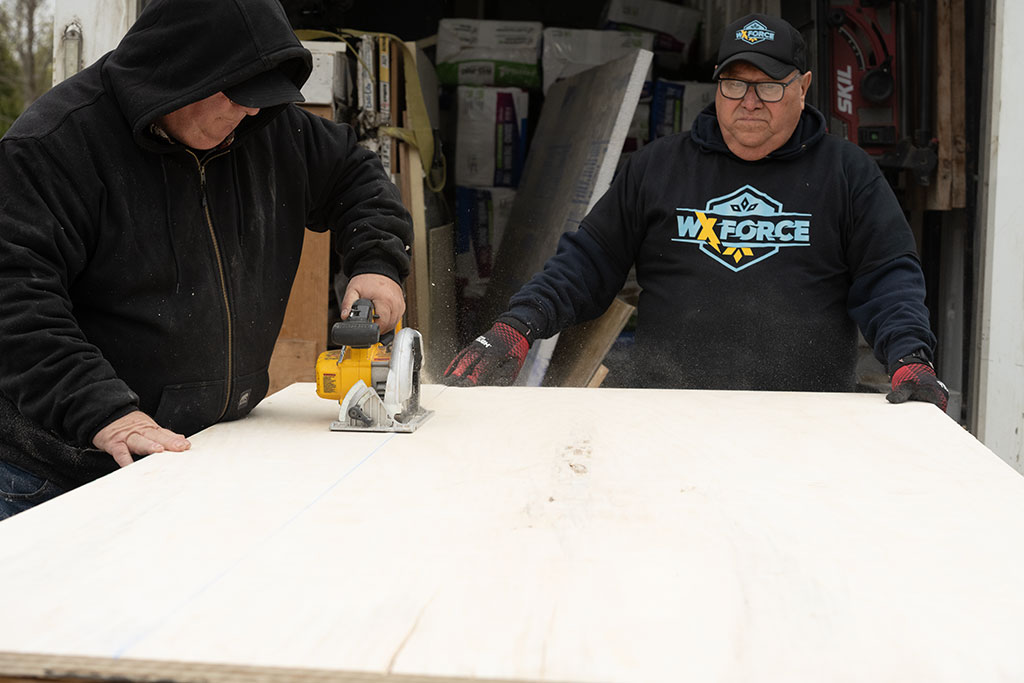
Weatherization work does involve physical movement. Technicians handle insulation materials, move tools and equipment, and work in areas of the home that require climbing, bending, or lifting.
Some projects involve climbing a ladder to reach attic access points. Others may require working in tighter spaces where insulation or sealing materials need to be installed. On many days technicians are on their feet moving through the house as different parts of the job are completed.
Safety is an important part of the work. Crews receive training on proper lifting techniques, tool use, and protective equipment so the work can be performed responsibly.
With experience, most technicians develop a rhythm that makes the physical side of the job feel routine rather than overwhelming.
Why Many People Enjoy This Type of Work
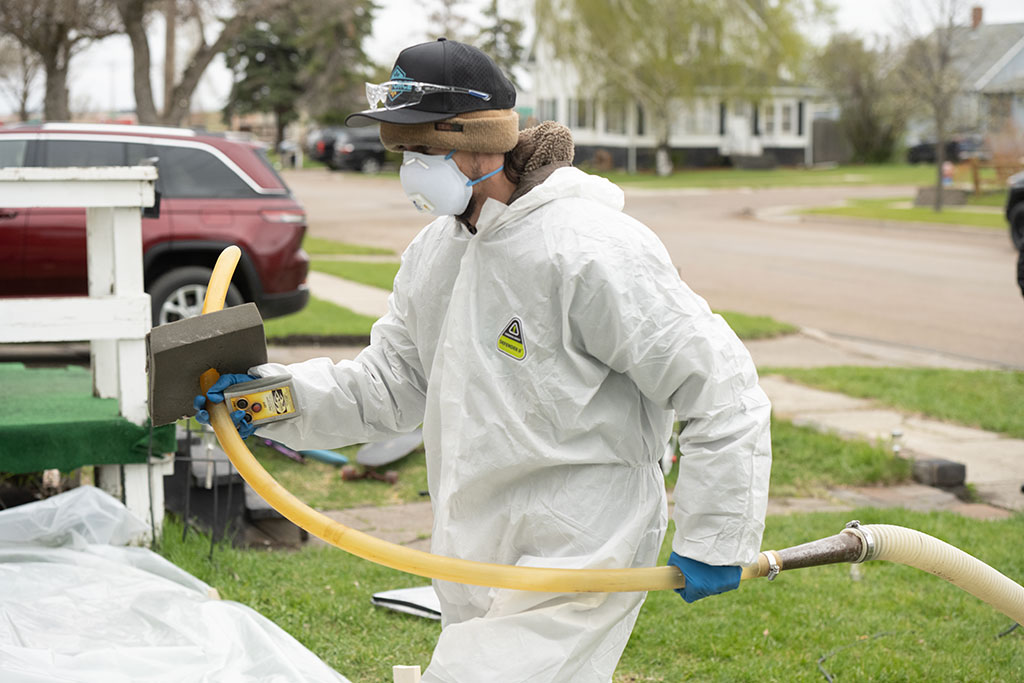
Not everyone enjoys spending the day at a desk. Weatherization jobs attract people who prefer staying active and seeing the results of their work directly.
One of the most satisfying parts of the job is finishing a project and knowing the improvements will make a difference for the people living in that home. When insulation is installed correctly and air leaks are sealed, the change in comfort can often be noticeable right away.
Technicians also tend to enjoy the team environment. Crews rely on each other to move projects forward, and over time those teams become tight-knit groups who know how to work efficiently together.
For people who like practical work and visible results, weatherization offers a career where effort turns into real outcomes.
Physical Work That Builds Real Skills
The physical nature of weatherization work also builds valuable trade skills over time.
Technicians become comfortable using construction tools, understanding how homes are built, and recognizing the areas where energy loss typically occurs. These skills open the door to more advanced roles within the field.
Many people begin as crew technicians and eventually move into positions such as:
- Crew Leader, managing job sites and guiding teams
- Energy Auditor, evaluating homes and identifying efficiency improvements
- Quality Control Inspector, ensuring projects meet program standards
What starts as hands-on work often becomes the foundation for long-term careers in the skilled trades.
Take the Next Step Into the Skilled Trades
If you're looking for a hands-on career where every day brings new challenges and opportunities to learn, weatherization offers a path to develop practical skills while making a difference in communities across North Dakota.